Mixing Station is a powerful application gaining traction amongst live sound engineers‚ offering extensive UI customization and remote control capabilities.
This manual details setup‚ advanced features like unlimited DCAs‚ and workflow techniques for controlling multiple consoles efficiently.
Mixing Station Anywhere extends this functionality‚ providing reliable remote mixing performance mirroring the standard application experience.
What is Mixing Station?
Mixing Station represents a significant leap forward in digital audio control‚ evolving from tools like Director to become a favored application within the live sound community. It’s fundamentally a software solution designed to provide engineers with comprehensive‚ customizable control over their mixing consoles – and now‚ multiple consoles simultaneously.
Initially‚ users appreciated its full UI customization options‚ allowing for tailored layouts optimized for various devices‚ including vertical phone configurations for quick access to essential functions. Beyond basic control‚ Mixing Station unlocks advanced features previously unavailable‚ such as unlimited DCAs (Virtual Control Associations) for nuanced level management across numerous channels.
Its capabilities extend to MIDI controller integration‚ offering tactile control‚ and crucially‚ the ability to manage up to eleven console lines from four different manufacturers. This versatility positions Mixing Station as a central hub for complex audio setups‚ streamlining workflows and enhancing control for professional sound reinforcement.
The Core Functionality of Mixing Station
At its heart‚ Mixing Station functions as a remote control surface for digital mixing consoles‚ translating user input into console commands. This extends beyond simple fader adjustments; it encompasses comprehensive control over channel parameters‚ routing‚ and effects. A key feature is its ability to manage complex ingredient chains – essential in scenarios requiring multiple mixers.
The clipboard functionality is central to this‚ enabling engineers to configure output routing between stations sequentially. For instance‚ a seven-ingredient mix utilizes seven stations‚ with the clipboard directing the signal flow from one to the next.
Furthermore‚ Mixing Station’s core strength lies in its adaptability. Whether operating locally or remotely via Mixing Station Anywhere‚ the functionality remains consistent‚ providing a familiar and reliable experience. This parity ensures seamless transitions between environments‚ empowering engineers with consistent control regardless of location.
Setting Up Your Mixing Station
Initial configuration involves connecting to your chosen console‚ ensuring network compatibility for Mixing Station Anywhere‚ and verifying supported manufacturers like Behringer.
Proper setup unlocks the app’s full potential.
Initial Configuration and Device Connections
Connecting to your mixer is the first crucial step. Mixing Station supports a growing list of digital consoles‚ and establishing a stable connection is paramount for seamless control. Ensure your mixing console and the device running Mixing Station are on the same network.
The application will automatically scan for compatible devices. Follow the on-screen prompts to select your console from the list. You may need to input the console’s IP address manually if auto-discovery fails. Verify that the console’s network settings allow communication from the Mixing Station device.
For optimal performance‚ a wired Ethernet connection is recommended‚ especially for critical live sound applications. Wireless connections can be used‚ but signal strength and stability should be carefully monitored. Once connected‚ calibrate the application to match your console’s channel configuration for accurate control and monitoring.
Supported Consoles and Manufacturers
Mixing Station boasts compatibility with a diverse range of professional digital mixing consoles‚ continually expanding its reach. Currently‚ the application offers robust control over consoles from four major manufacturers‚ including support for the popular Ui series. This allows engineers to leverage the app’s advanced features across different setups.
Specific models supported include those from leading brands known for their reliability and performance in live sound environments. The developers are actively working to add support for additional consoles based on user demand and technical feasibility.
Functionality varies slightly between consoles‚ with features like unlimited DCAs (VCAs) being particularly beneficial for certain models. Check the official Mixing Station website for the most up-to-date list of supported consoles and their respective feature sets.
Networking Requirements for Mixing Station Anywhere
Mixing Station Anywhere relies on a stable and secure network connection for optimal performance. A consistent internet connection is paramount for remote mixing‚ ensuring minimal latency and reliable control. Both the control device (phone‚ tablet‚ or computer) and the mixing console must be connected to the internet.
A wired Ethernet connection is recommended for the console to provide the most stable link. For remote control devices‚ a strong Wi-Fi signal is essential. Consider network bandwidth; higher bandwidth supports smoother operation‚ especially when controlling multiple console lines simultaneously.
Firewall configurations may need adjustment to allow communication between the Mixing Station application and the console. Refer to the Mixing Station documentation for specific port requirements and troubleshooting tips to ensure seamless remote access.

User Interface and Customization
Mixing Station boasts full UI customization‚ allowing engineers to create tailored layouts for various gigs and preferences‚ including vertical and landscape configurations.
This adaptability enhances workflow and accessibility‚ especially when utilizing mobile devices for live sound control.
Full UI Customization Options
Mixing Station truly shines with its comprehensive UI customization features‚ empowering users to design interfaces perfectly suited to their individual workflows and gig requirements. Beyond simple re-arrangements‚ the application allows for granular control over element placement‚ sizing‚ and visibility.
Users can create dedicated layouts for different scenarios – a streamlined phone-based interface for quick adjustments‚ or a detailed landscape view for complex mixes. The ability to prioritize frequently used functions‚ like channel pages and essential controls (SoF)‚ is a significant benefit.
This level of personalization extends to visual elements‚ enabling a comfortable and efficient mixing experience. The flexibility to adapt the UI ensures that Mixing Station remains a powerful tool‚ regardless of the mixing environment or device used;
Creating Custom Layouts for Different Gigs
Mixing Station’s adaptability is maximized through its layout creation tools‚ allowing engineers to pre-configure interfaces tailored to specific event types. Whether managing a corporate presentation or a live music performance‚ dedicated layouts streamline the mixing process.
The application supports both vertical and landscape orientations‚ offering distinct advantages depending on the device and mixing style. A compact vertical layout is ideal for mobile devices‚ prioritizing essential controls for quick access. Conversely‚ a landscape configuration provides ample space for detailed channel views and complex routing.
Saving multiple layouts ensures a seamless transition between gigs‚ eliminating the need for constant re-configuration and maximizing efficiency. This feature is a cornerstone of Mixing Station’s workflow optimization.
Vertical vs. Landscape UI Configurations
Mixing Station offers remarkable flexibility with its support for both vertical and landscape user interface configurations‚ catering to diverse mixing scenarios and device preferences. Vertical mode excels on smartphones‚ prioritizing essential functions like channel pages and solo/mute controls in a streamlined‚ easily accessible format.
Landscape orientation‚ conversely‚ unlocks a broader canvas‚ ideal for tablets and larger screens. This allows for more detailed channel strip views‚ expanded metering‚ and complex routing configurations. Engineers can effectively manage numerous parameters simultaneously.
The choice depends on the gig’s complexity and the engineer’s workflow. Quick‚ simple setups benefit from vertical compactness‚ while intricate mixes thrive in landscape’s spaciousness.
Advanced Features and Techniques
Mixing Station unlocks powerful control through unlimited DCAs (VCAs)‚ MIDI controller integration‚ and the ability to manage multiple console lines simultaneously.
These features elevate mixing precision and efficiency for experienced audio professionals.
Utilizing Unlimited DCAs (VCAs)

Mixing Station fundamentally changes gain control with its implementation of unlimited DCAs (Digital Control Associates)‚ often referred to as VCAs (Voltage Controlled Amplifiers). Traditionally‚ consoles limit the number of available DCAs‚ forcing engineers to make compromises in grouping and control.
This limitation is removed within Mixing Station‚ allowing for incredibly granular control over individual elements and complex subgroups within a mix. Imagine dedicating a DCA to every drum element‚ vocal harmony‚ or even specific frequency ranges – the possibilities are extensive.
Single faders can then control multiple channel levels‚ streamlining adjustments during live performance. This is particularly beneficial when working with consoles like the Ui series‚ where this functionality expands the console’s inherent capabilities. The ability to create and assign DCAs dynamically adapts to the specific needs of each gig‚ offering unparalleled flexibility.
MIDI Controller Integration
Mixing Station elevates control beyond touchscreen interfaces through robust MIDI controller integration. This feature unlocks a tactile and familiar mixing experience for engineers accustomed to traditional hardware.
Connecting a MIDI controller allows for hands-on adjustment of faders‚ knobs‚ and buttons directly mapped to Mixing Station’s parameters. This provides a more intuitive workflow‚ especially during live performances where precise and rapid adjustments are crucial.
Custom mapping is a key component‚ enabling users to tailor the controller’s layout to their specific needs and preferences. Control virtually any aspect of the mix‚ from channel levels and EQ to effects sends and DCA assignments. This integration transforms Mixing Station into a powerful‚ hybrid mixing solution‚ blending the flexibility of software with the feel of hardware.
Controlling Multiple Console Lines
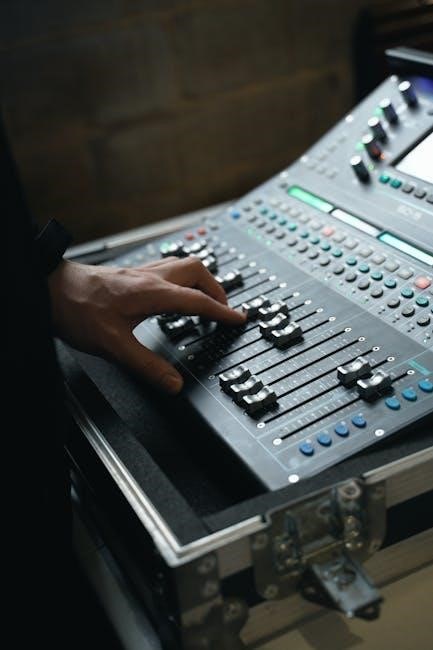
Mixing Station distinguishes itself with the ability to simultaneously control up to eleven different console lines‚ sourced from four distinct manufacturers. This groundbreaking feature streamlines workflows for complex setups and large-scale events.
Previously a limitation‚ this capability expands the application’s versatility‚ particularly for consoles like the Ui series‚ unlocking functionality such as unlimited DCAs (VCAs) and enhanced layout customization. Engineers can manage multiple mixers from a single interface‚ reducing the need for constant switching between applications.
This centralized control simplifies monitoring and adjustment across the entire sound system‚ improving efficiency and responsiveness during live performances. It’s a significant advancement for professionals managing intricate audio configurations.
Workflow and Practical Applications
Mixing Station excels at managing complex mixes‚ supporting multiple mixers and ingredient-based station sequencing via clipboard functionality for efficient output routing.
This allows for streamlined control and precise configuration of audio signals across diverse setups.
Using Mixing Station with Multiple Mixers
Mixing Station truly shines when deployed across multiple mixing consoles simultaneously. The application’s architecture allows for seamless control‚ but requires a thoughtful approach to setup and workflow. If a mix demands a substantial number of ‘ingredients’ – representing individual audio sources or processing chains – you’ll need a corresponding number of mixing stations.
For example‚ a seven-input mix necessitates seven dedicated stations. The key to interconnectivity lies in the clipboard functionality. Configure the output of the first mixing station to feed the input of the second‚ and so on‚ creating a sequential chain. Each storage location should hold only one ingredient‚ ensuring clarity and organization throughout the process. This method facilitates complex routing and precise control over intricate audio landscapes.
Ingredient Management and Station Sequencing
Effective Mixing Station operation hinges on meticulous ingredient management and a logical station sequence. Each ‘ingredient’ represents a distinct audio element requiring individual processing or routing. Assigning each ingredient to a dedicated station ensures clarity and prevents signal conflicts. When utilizing multiple mixers‚ the sequencing of stations becomes paramount.
Think of it as an assembly line: the output of one station feeds directly into the input of the next. The clipboard functionality is crucial here‚ allowing you to define these connections with precision. Loading each storage location with a single ingredient streamlines the workflow and minimizes errors. This systematic approach is vital for complex mixes‚ guaranteeing a smooth and controlled audio experience.
Clipboard Functionality for Output Routing
Mixing Station’s clipboard is a cornerstone of its advanced routing capabilities‚ especially when working with multiple mixers. It allows you to copy and paste output configurations between stations‚ drastically reducing setup time and ensuring consistency; This is particularly useful when chaining stations together to create complex signal flows.
Imagine configuring the output of the first mixing station‚ then seamlessly replicating that setup to the second‚ third‚ and subsequent stations using the clipboard; This eliminates repetitive manual adjustments; The clipboard stores not just the destination‚ but also any associated processing parameters‚ maintaining signal integrity throughout the chain. Mastering this feature unlocks efficient and precise control over your entire audio system.

Remote Mixing with Mixing Station Anywhere
Mixing Station Anywhere delivers the full power of the standard application remotely‚ enabling engineers to mix from any location with reliable performance.
This feature maintains functionality parity‚ offering a consistent experience regardless of where you are mixing from.
Benefits of Remote Audio Mixing
Remote audio mixing‚ facilitated by Mixing Station Anywhere‚ unlocks a new level of flexibility and efficiency for audio professionals. Imagine the ability to address critical sound issues or make nuanced adjustments without physically being present at the venue – this is the power offered.
This capability is particularly valuable for situations where immediate on-site intervention is impractical or impossible‚ such as geographically dispersed events or when engineers need to support multiple shows simultaneously. It also allows for expert consultation from anywhere in the world‚ bringing specialized skills to any location.
Furthermore‚ remote mixing reduces travel costs and logistical complexities‚ contributing to a more sustainable and cost-effective workflow. The consistent functionality with the standard version ensures a seamless transition and minimizes the learning curve‚ making it a practical solution for both seasoned professionals and emerging engineers.
Functionality Parity with the Standard Version

Mixing Station Anywhere isn’t a stripped-down version; it’s designed to mirror the full capabilities of the original Mixing Station application. This commitment to parity ensures a consistent user experience‚ regardless of location. Engineers familiar with the desktop or tablet interface will find the remote functionality intuitive and readily accessible.
All core features‚ including custom layout configurations‚ unlimited DCAs (VCAs)‚ and MIDI controller integration‚ are fully supported in the remote environment. This eliminates the need to relearn a different system or compromise on control when working remotely.
The goal is to provide the same reliable performance and comprehensive control from any location‚ empowering engineers to deliver professional-quality audio mixes consistently‚ whether on-site or remotely. This seamless integration is a key differentiator.

Troubleshooting and Support
Mixing Station offers solutions for common issues‚ alongside extensive online resources. Dedicated support channels and the active Reddit community provide assistance.
Find FAQs‚ tutorials‚ and contact information for prompt help with any challenges encountered while using the application.
Common Issues and Solutions
Connectivity Problems: Ensure a stable network connection when using Mixing Station Anywhere. Verify router settings and firewall configurations‚ as these can often disrupt communication between the app and the console.
Console Compatibility: While Mixing Station supports multiple manufacturers‚ occasional compatibility hiccups may occur. Check the official documentation for supported models and firmware versions. Updating console firmware can often resolve these issues.
UI Responsiveness: Complex custom layouts with numerous elements can sometimes impact performance‚ especially on older devices. Simplify your layout or reduce the number of active controls to improve responsiveness.
MIDI Controller Mapping: Incorrect MIDI mapping can lead to unexpected behavior. Double-check your MIDI assignments within the app’s settings and ensure they align with your controller’s configuration.
Unexpected Crashes: Regularly update Mixing Station to benefit from bug fixes and performance improvements. If crashes persist‚ try clearing the app’s cache or reinstalling it.
Where to Find Additional Help and Resources
Official Website: The primary source for documentation‚ FAQs‚ and the latest software updates is the official Mixing Station website. Explore the support section for detailed guides and troubleshooting tips.
Reddit Community (r/livesound): Engage with fellow users on the r/livesound subreddit. This active community frequently discusses Mixing Station‚ sharing workflows‚ custom layouts‚ and solutions to common problems.
Manufacturer Forums: Check the forums of your console manufacturer (e.g.‚ Behringer‚ Soundcraft) for Mixing Station-specific threads and compatibility information.
YouTube Tutorials: Numerous video tutorials demonstrate Mixing Station’s features and functionalities. Search YouTube for “Mixing Station tutorial” to find helpful visual guides.
Direct Support: For personalized assistance‚ contact the Mixing Station support team directly through their website or email.